
Your Guide to Getting Corporate Sponsors for School Auctions

For many PTAs and educational development offices, the annual auction is the primary event that determines whether the school gets a new playground, an upgraded computer lab, or funding for essential extracurriculars. But here’s the reality: Ticket sales and bids alone rarely reach the full potential of your fundraising goals. To truly move the needle for your upcoming auction, you need a strategy for getting corporate sponsors.
Why? Corporate sponsorships can provide both the upfront financial support that covers overhead and the high-value in-kind donations that drive bidding wars.
But the secret to securing these sponsors isn’t cold calling every business in the phone book. It’s leveraging the data you already have and using best-in-class technology to turn prospects into opportunities.
In this guide, we’ll show you how to find, pitch, and land corporate sponsors to level up your next auction (plus spotlight a few examples of schools that have done it right). Let’s dive in!
Understanding Financial vs. In-Kind: Building a Balanced Portfolio
A successful school auction can generally benefit from two types of corporate support: financial (monetary) and in-kind (non-monetary, e.g., goods and services). Understanding the differences and how to ask for each is the key to getting corporate sponsors effectively.
Financial Sponsorships
Typically organized into tiers (such as Bronze, Silver, and Gold), these cash contributions are vital for producing a high-quality auction event. When a corporation cuts a check for a sponsorship, those funds are used to offset overhead costs: everything from venue rental and catering to printing your auction catalog and bid paddles.
The primary benefit here is revenue protection. By collecting enough cash to cover 100% of your event expenses, you ensure that every dollar raised through the auction goes directly to students and school programs.
The Ask: When pitching financial sponsorships, speak the language of a marketing executive. Don’t just ask for a donation; offer a premium advertising platform. Highlight your community demographics: a concentrated group of “spending-ready” parents and other community supporters who are the exact target market for many local businesses. For the best results, provide detailed metrics, such as how many times their logo will appear in emails, on your website, and on the big screen during the event.
In-Kind Donations
In-kind donations, on the other hand, are professional goods or services provided by a business in lieu of cash donations. These are the “stars” of your auction block: the big-ticket items that generate excitement and high-energy bidding. Think of high-value experiences: a week-long stay at a private vacation home, a signed jersey from a local sports hero, or a multi-course dinner prepared in-home by a private chef.
Procuring these items as donations (rather than purchasing yourself) means you’ll have a greater ROI for your event! If you were to purchase a $500 iPad to auction, you would profit only from any bid amount above the upfront cost. However, if a local electronics store donates that same iPad, every penny of the winning bid is pure profit for your school.
The Ask: Frame an in-kind donation request as a live demonstration. Tell the owner of a local boutique or spa that by donating a “Day of Pampering” package, they are putting their best service in front of 500 local parents (also known as ideal repeat customers). Remind them that whoever wins the item is often inclined to become a loyal, long-term client.
Check out our tips for crafting compelling in-kind donation requests here!
The Power of “Warm” Data: Start with Your Own Network
The most effective sponsorship pitch is one where a connection already exists. Before looking outward for potential partners, look inward at your school’s donor management system or CRM to locate warm networking opportunities.
Leverage Parent and Alumni Employment Data
Your biggest advocates are typically already in your hallways and carpool lanes. Corporations are significantly more likely to sponsor an event if an employee (especially one in a leadership position) is personally invested in the cause.
- The Parent Connection: Audit your database for parent employer information. If a current student’s “grown-up” works for a regional bank, a tech firm, or a local law practice in your area, that company is no longer a “cold” lead. It’s a warm opportunity.
- The Alumni Network: For high schools and higher education institutions, alumni are a goldmine. Many graduates want to give back to the schools that helped shape them, and they can often influence their company’s CSR budget as well.
Pro Tip: If your database is missing employment information, send out a quick “Community Update” survey. Ask parents, alumni, and core donors to update their current workplace information. Frame it as a way to uncover corporate giving opportunities and build a professional networking directory for your community. Then, be sure to collect employer details directly within your donation forms and volunteer registrations going forward!
Identifying (and Leveraging) the “Internal Champion”
When you locate a parent, alum, or other supporter at a target company, don’t ask them for money; ask them to be your Internal Champion. Find out if they can introduce you to the person who handles community giving or marketing sponsorships at their place of employment.
A “warm intro” from an employee often bypasses the generic “info@” email inbox and puts your proposal directly on the right desk.
Scaling With Technology: Corporate Sponsorship Databases & More
While your internal list is the best place to start, relying solely on manual research can be a bottleneck for a busy school fundraising team. To truly scale your outreach, you need a way to identify companies with a documented track record of supporting schools like yours. This is where professional fundraising technology becomes your secret weapon.
Our top recommendation? Double the Donation’s corporate giving database.
Research with Precision
Instead of guessing which businesses might say “yes” to your request, Double the Donation’s industry-leading Sponsorship Directory allows users to search with surgical precision. It essentially provides access to a curated goldmine of companies that offer:
- Financial Sponsorships: Identify corporations with pre-allocated budgets for cash grants and financial event sponsorships in exchange for the marketing exposure your auction provides.
- In-Kind Donations: Uncover companies that routinely donate physical auction items (such as the latest electronics, luxury travel vouchers, or high-end gift cards), saving your procurement team hundreds of hours of cold-calling.
- Workplace Giving Programs: Discover if a local employer will double employees’ event donations or even pay your school for the hours their staff spend helping set up your silent auction tables through volunteer grants.
You can even use the search tool to filter according to companies’ giving interests. By targeting businesses that explicitly list “Education,” “K-12 schools,” or “Community Development” as a primary philanthropic focus, you ensure your proposal reaches someone ready to support an institution like yours.
Seamless Integration for Maximum Efficiency
One of the most powerful features of Double the Donation is its versatility. Its sponsorship directory widget integrates seamlessly with many of the industry’s top event fundraising and auction management tools (including BetterUnite, BiddingOwl, SchoolAuction, and more).
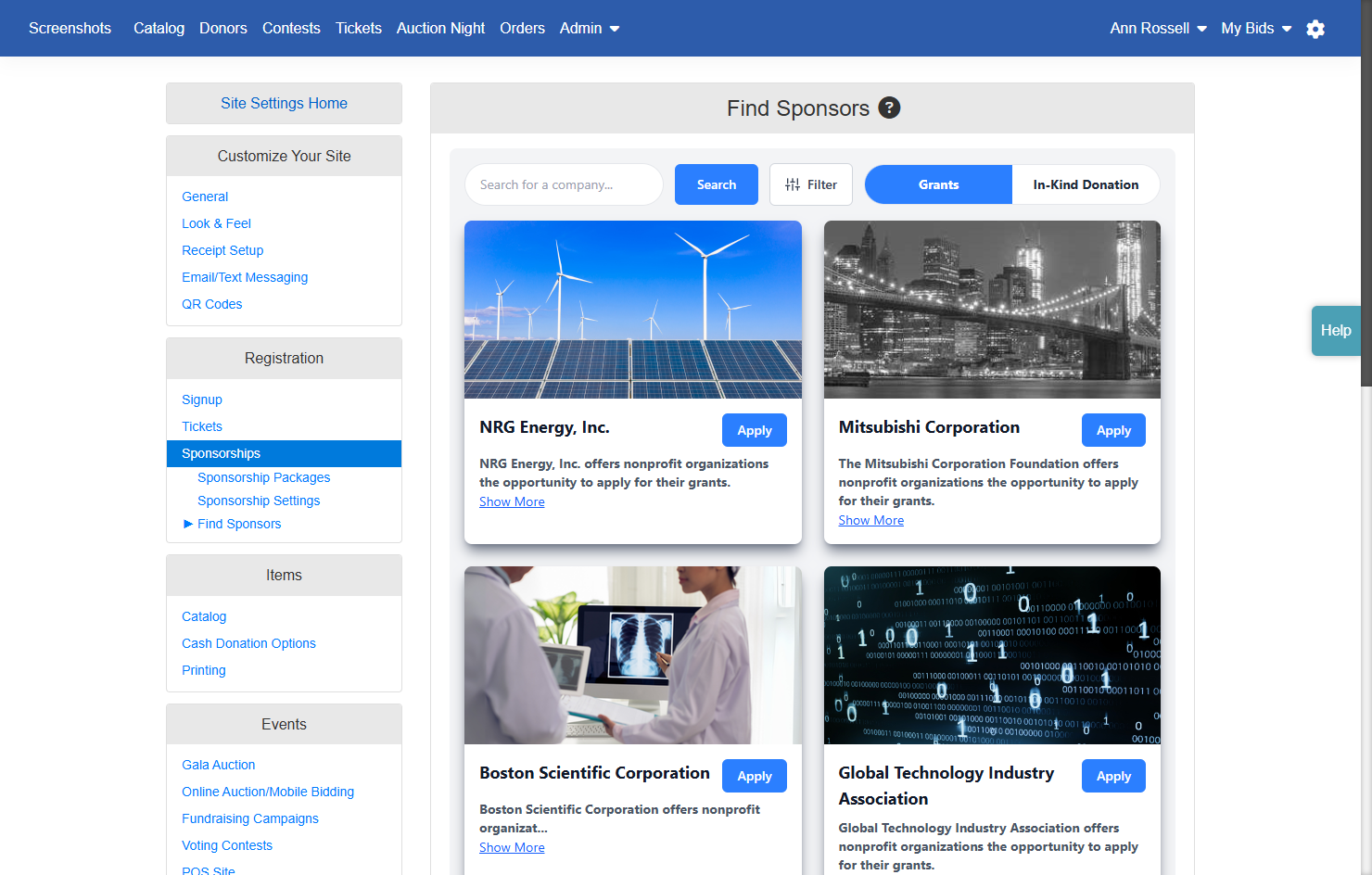
This means you can pull sponsorship data and more directly into your existing software, ensuring that no “warm” lead or corporate dollar is left on the table during the high-speed chaos of event planning.
Making the Pitch: Data-First, Value-Driven Sponsorship Proposals
As you navigate the sponsorship process for your upcoming school auction, it’s helpful to remember that corporate sponsors generally aren’t in the business of “giving” to a charity the way an individual donor might. While altruism and community spirit certainly play a significant role, these companies are making a conscious business decision. They are looking for a partnership that provides a return on their investment, whether that’s through increased brand visibility, enhanced employee engagement, or strengthened customer loyalty.
To increase your chances of securing an agreement, your proposal needs to look less like a plea for help and more like a high-value marketing opportunity.
What You Should Feature in Your Sponsorship Deck:
A corporate sponsorship deck is a short, visually appealing presentation (typically 5-10 slides) that tells your school’s story through the lens of data. Here’s what you’ll want to include:
- Audience Demographics: Businesses need to know exactly who they are talking to. How many people attend your auction? What is the geographic footprint of your school? You’re offering the sponsor a direct line to a highly desirable, local audience.
- Reach & Impressions: Your value extends far beyond the four hours of the auction. Mention the size of your weekly email newsletter list, your social media following, and the traffic to your website. Sponsors want to know how many impressions (or views) their logo will get in the months leading up to the event.
- Your Impact Statement: While it’s important to lead with data, you should close with your mission. Clearly state exactly what the funds will do. “Help us raise $50,000” is a vague financial goal; “Help us build a state-of-the-art STEAM lab for 400 students” is an investment in the future.
- Strategic Sponsorship Tiers: Structure your sponsorship levels so the jump in value is obvious. For example, a Gold tier might provide a full-page program advertisement and 4 VIP auction tickets, while Silver could include a half-page ad and 2 general admission event tickets.
From there, you’ll want to incorporate the “warm lead” advantage by tying your proposal back to your previous data research. If you’ve discovered that a local company has a strong matching gift program or its employees are known for their history of supporting K-12 education, mention that in your cover letter. Tailoring your pitch to show that you’ve done your homework proves you are a professional partner who values their corporate mission.
How These 4 Schools Secured Successful Auction Sponsorships
Interested in seeing these best practices in action? Check out a few examples of how real schools secured corporate sponsors for their auction fundraisers.
(Hint: See which ideas you can borrow for your own upcoming event!)
1) Holy Family School: The “Gem” of Sponsorship Levels
Holy Family School proves that your sponsorship tiers should be as visually striking as they are clear. By using a “Gemstone” theme (Emerald for $500, Ruby for $1,000, and Diamond for $2,000+), the institution establishes an immediate sense of prestige.

What other schools can learn: Don’t just list sponsorship prices. Create a comprehensive identity for each level. For example, Holy Family’s Diamond tier offers a prominent presence throughout the evening and a full table for 10 guests. This all-inclusive approach makes it an easy sell for businesses looking to get the biggest bang for their buck while supporting a local cause.
2) Lake Center Christian School: Transparency That Drives Results
Lake Center Christian School takes a masterful approach to goal-based sponsorships. By clearly stating its $145,000 fundraising objective directly within its auction sponsorships flyer, the team transforms a sales pitch into a community mission.
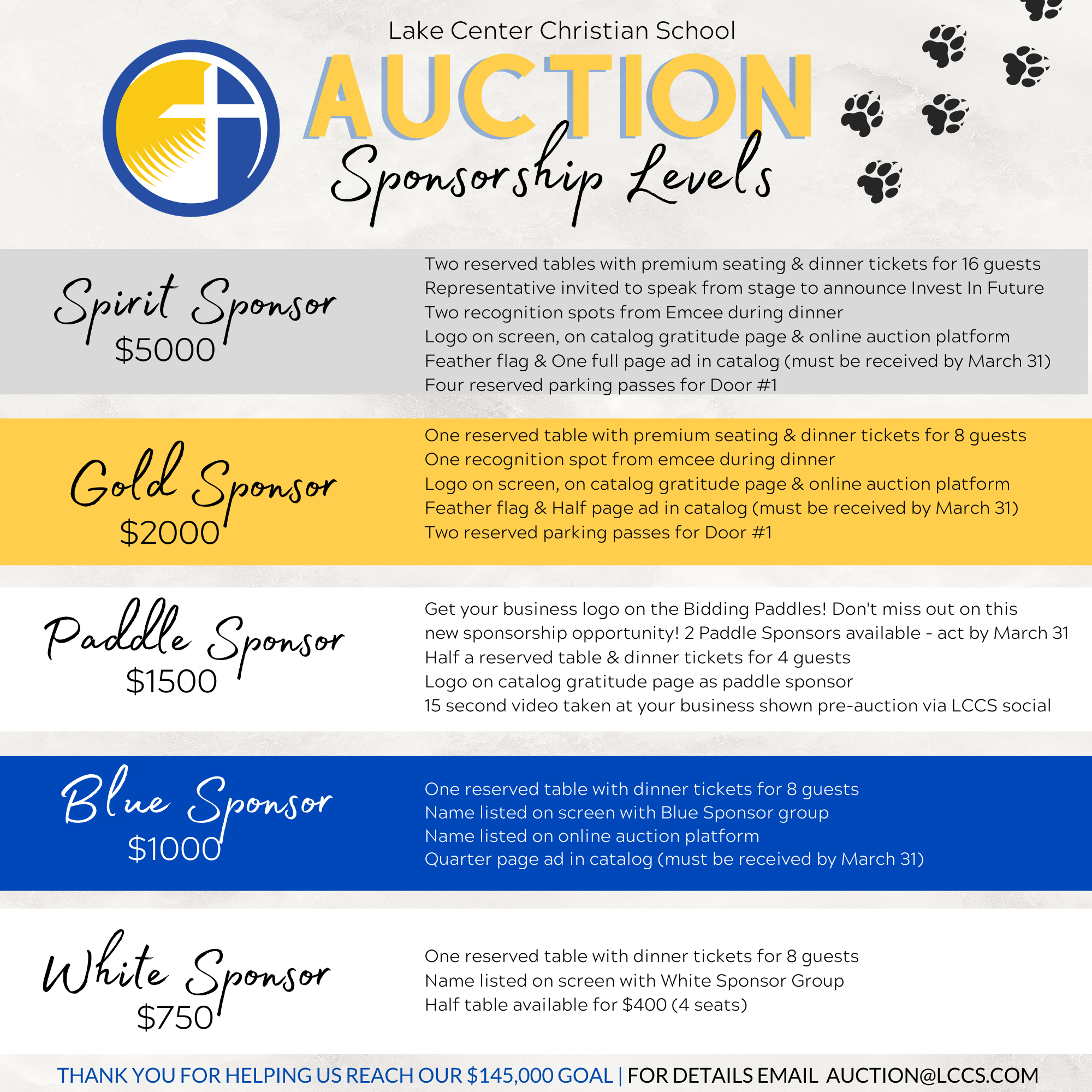
What other schools can learn: When you lead with a specific, lofty (yet attainable) goal, you effectively shift the sponsorship conversation from “What does this cost?” to “How can we help you get there?” LCCS structures its tiers, ranging from the Spirit Sponsor ($5,000) down to the White Sponsor ($750), as essential building blocks toward that $145k finish line.
3) St. Augustine School: Creative Naming Strategies
Why stick to “Gold” and “Silver” sponsorship tiers when you can establish levels that resonate with your school’s culture? St. Augustine School uses a creative naming strategy that leans into school pride, as highlighted by their “Teacher’s Pet” auction sponsorship opportunity.
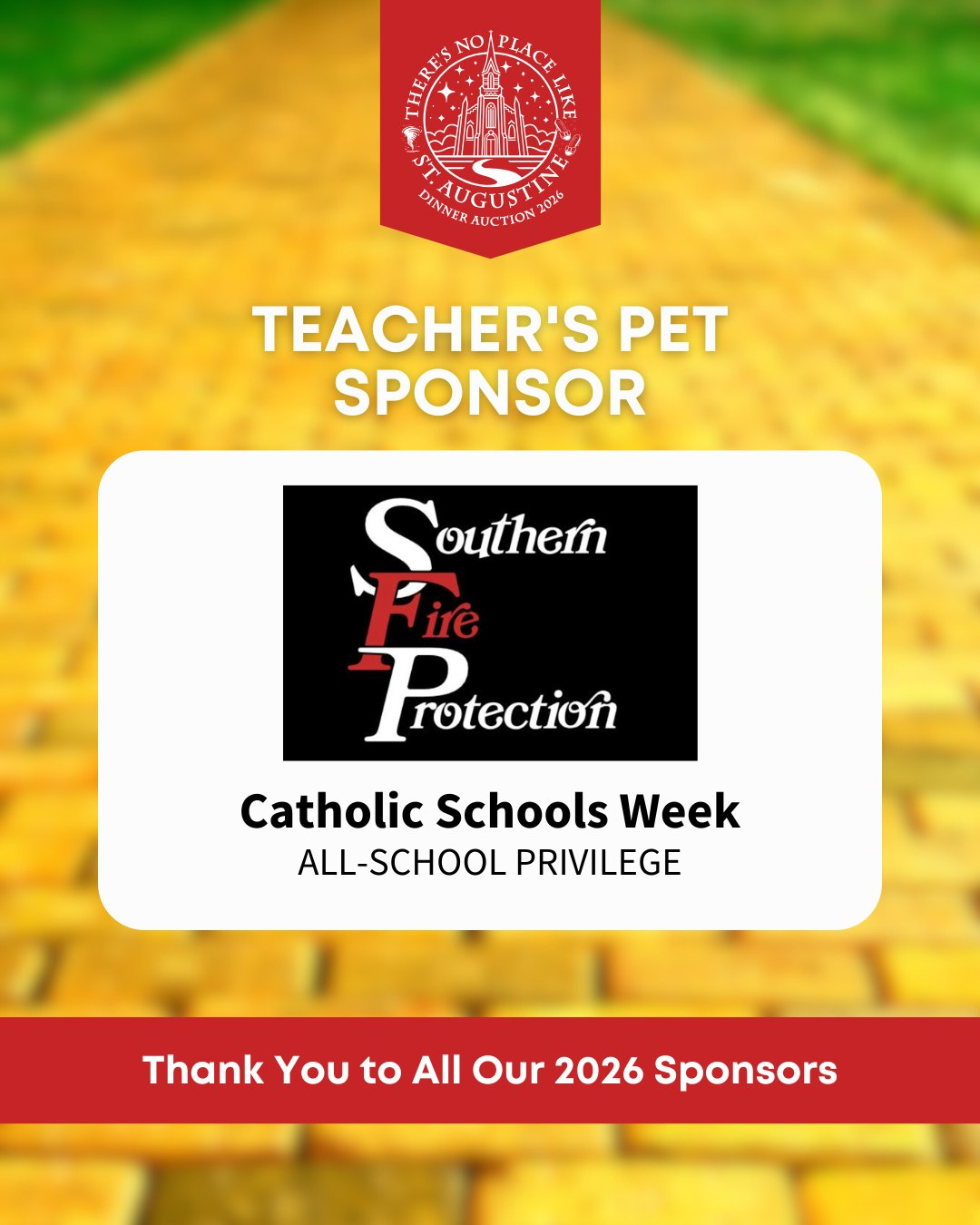
What other schools can learn: Naming your tiers after school roles or mascot themes makes the sponsorship feel like a privilege rather than a transaction. It also adds a touch of personality and warmth to the proposal, which can be the deciding factor for a local business owner with a soft spot for educators.
4) Lynden Christian School: The Art of Public Acknowledgment
Public acknowledgment can play a significant role in the success (and longevity) of corporate partnerships. Lynden Christian School excels at this task by grouping its auction sponsors into “Club,” “Event,” and “Team” tiers on a well-designed, high-visibility online thank-you board.

What other schools can learn: Visual recognition delivers strong ROI for businesses. By featuring professional logos on a clean, themed background, the school provides sponsors with a high-quality shout-out that businesses are proud to share on their own social media. This level of professional gratitude is what turns a one-time donor into a lifetime partner.
Wrapping Up
Securing corporate sponsors for your school auction doesn’t have to feel like an uphill battle of cold calls and unrelenting “no’s.” When you shift your strategy toward warm opportunities and equip your team with the right tools to win support, the process becomes more efficient and far more lucrative.
Remember, a corporate sponsor isn’t just a source of revenue; it is a valuable member of your school’s community. Treat their team with professional excellence, deliver measurable value, and steward the relationship with genuine gratitude. When you do, you aren’t just funding an auction; you’re building a sustainable foundation that will benefit your students for years to come.
The Author


